
"Owned by those we serve"
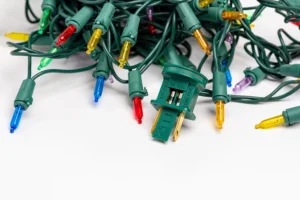
As festivities amp up, focus on safety
Facing late fall’s shorter days and increasingly cooler temperatures, homeowners have to keep the lights burning longer and crank up the heat. On the bright side, the holidays are upon us, so it’s time to string up festive lights and set up decorations that bring warmth no thermostat can measure.
To ensure the coming weeks bring joy rather than disaster, Electrical Safety Foundation International offers important advice.
- Inspect electrical decorations for damage before use. Cracked or damaged sockets, loose or bare wires, faulty plugs and loose connections can cause a serious shock or start a fire.
- Do not overload electrical outlets or extension cords. Overloaded outlets and faulty wires are a common cause of holiday fires. Plug only one high-wattage device into each outlet at a time.
- Never connect more than three strings of incandescent lights together. More than that might blow a fuse or even cause a fire. Also, if a bulb on the string needs to be replaced, always unplug the strand.
- Water fresh-cut trees daily. Dry trees are a serious fire hazard. Ensure that trees, whether fresh or artificial, are placed away from heat sources such as registers, fireplaces, radiators and televisions.
- Use battery-operated candles. Traditional candles start almost half of home decoration fires, according to the National Fire Prevention Association.
- Keep holiday decorations at least 3 feet from heat sources. Close proximity to a heat source was a factor in half of home fires that involved decorations, NFPA says.
- Protect cords from damage. Cords should never be pinched by furniture, forced into small spaces such as doors and windows, placed under rugs, located near heat sources or attached by nails or staples.
- The holiday season often means more traffic in the home, whether from children and pets running around or elderly guests navigating unfamiliar areas. So, make sure all electric cords are safely out of the way.
- Check decorations for a certification label. Decorations not bearing a label from an independent testing laboratory, such as UL Solutions, have not been tested for safety and could be hazardous.
- Outdoors, use only lights, cords and decorations rated for outside use. Plug the cords for outdoor items into outlets equipped with ground-fault circuit interrupters. Use a portable GFCI if your outdoor outlets don’t have them.
- Take extra care not to throw strings of lights over tree branches that are near power lines and service connections.
- Turn off and unplug indoor and outdoor lights and other decorations before going to bed or leaving home or use a timer that turns them off. Half of home fire deaths occur between the hours of 11 p.m. and 7 a.m., NFPA statistics show, so don’t take chances by leaving lights and other decorations on as you sleep.
- If you light candles, make sure they are extinguished when you’re going to bed or leaving the house. NFPA says 1 in 5 home candle fires is caused by candles left burning unattended.
- When preparing holiday meals, stay in the kitchen while cooking. Unattended cooking equipment is the leading cause of home cooking fires, NFPA says. Keep cooking areas clean and clear of grease, and do not leave combustible items, such as towels and potholders, near the stovetop.
- Never plug more than one high-wattage kitchen appliance into a single outlet. If using an outlet near a sink, make sure it is GFCI-equipped.
- Always have a working fire extinguisher on hand and know how to use it.
- If you are traveling for the holidays and get into an accident involving a utility pole, remember that the safest place is almost always in the vehicle. If you encounter a downed power line, call 911. Be aware that it does not need to be sparking to be energized, and always assume it is energized and dangerous. Only exit the vehicle if it is on fire. To exit, jump clear of it with your feet together and without touching the vehicle and ground at the same time. Then, still keeping your feet together, shuffle or hop to safety.