"Owned by those we serve"
Seasonal changes mean savings for members
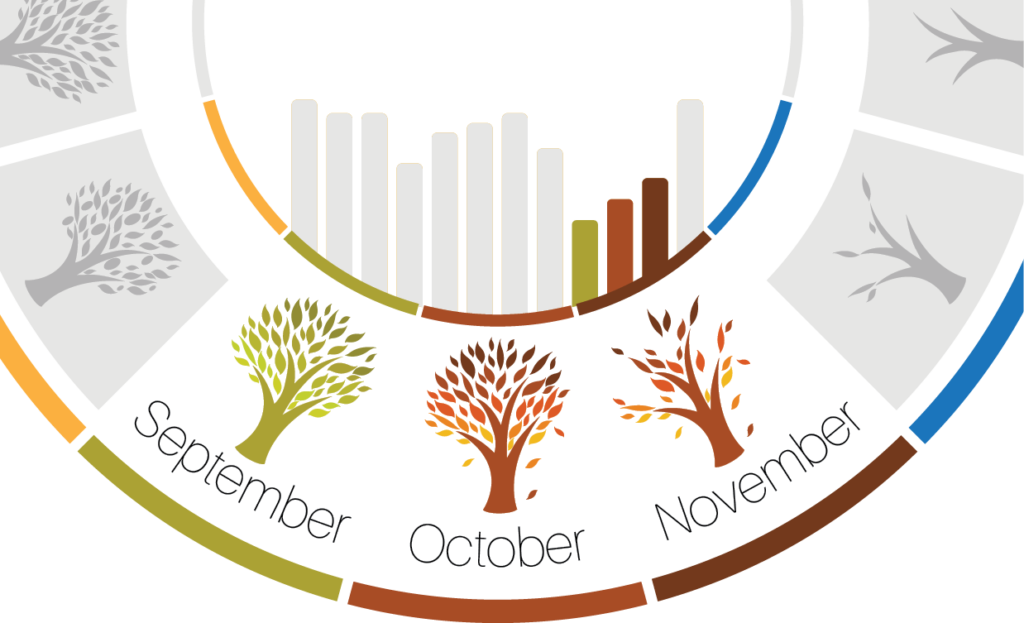
Fall is just around the corner, meaning we’re entering “shoulder months.” This is a familiar term in the travel industry, referring to the weeks before and after the peak summer vacation season. Among electricity providers, shoulder months — March through May in the spring and September through November in the fall — reflect periods of milder weather when energy use for indoor heating or cooling can be greatly reduced.
As the weather transitions from summer’s sizzle to the refreshing crispness of fall, there are simple ways to boost indoor comfort that don’t require running a cooling or heating system. The best of these involve air circulation.
Stay cool by using oscillating or ceiling fans in occupied rooms. Set the ceiling fans to spin counterclockwise on low speed, creating a gentle downdraft that pushes cooler air toward the living spaces. Open windows on the cooler side of your home when there’s a breeze, and lower window coverings enough to block heat from the streaming sunshine. In the warmest room, set up a box fan facing outward to pull heat away.
On cooler days, break out that fall wardrobe or just add a layer of clothing and use a throw blanket to avoid turning on the heat. Sunny days are the time to open curtains and blinds, especially on south-facing windows, for natural warming.
Also, fall is a good season to start using a humidifier, since moisture holds heat longer. That extra chill in the air is often due to humidity levels that have dropped along with the temperatures. In your bedroom, swap lightweight linens for heat-trapping covers. At night, give your bed welcoming warmth with an electric blanket or by putting a hot water bottle or microwavable heat pack under the covers about 20 minutes before you settle in.
Using less energy during shoulder months can mean big savings on electric bills for cooperative members and other utility customers. The resulting lower demand will sometimes even drive down the prices local utilities pay for the electricity they provide. It also normally means a reduction in required power generation because the system usually doesn’t need to operate at full capacity during shoulder months, according to the U.S. Energy Information Administration. This is the time power suppliers can perform maintenance, which is an essential part of ensuring a reliable electricity system.